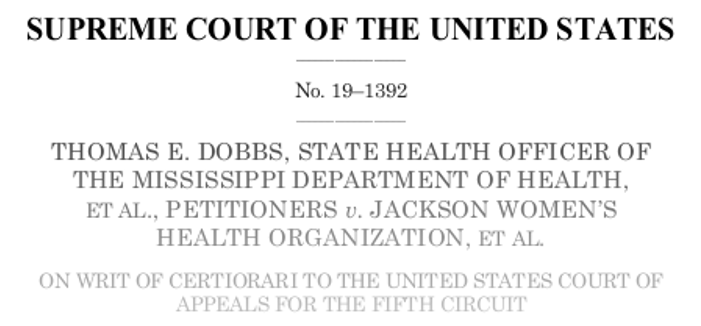
As always, you can find the Dobbs v. Jackson decision here.
Paragraph 4 of 8
Sentence 2 of 3
The next sentence is a single claim, and one we’ve already confirmed:
“Quite to the contrary, in the 1732 case mentioned above, the judge said of the charge of abortion (with no mention of quickening) that he had ‘never met with a case so barbarous and unnatural.’28”
This says less about the nature of the crime and more about the extent of this judge’s life experiences. Or maybe the state of hyperbole in 1732 England. Whether it means anything or not, this claim is true, as I transcribed it here just two sentences ago:
“His Lordship summed up the Evidence in a very moving Speech to the Jury, wherein he said, he never met with a Case so barbarous and unnatural. The Jury, after a short Consultation, brought the Prisoner in Guilty of both Indictments, and she received Sentence to stand on the Pillory, the Two next Market-Days, and to suffer close Imprisonment for Three Years.
I have questions about this that aren’t important to this project. What are some cases the judge might have been familiar with in 1732? Was it a young judge? We live in a time of hyperbole and superlatives, and it’s easy to imagine a random person in 2023 casually saying something to this effect—was it as common for people to exaggerate the significance of what they were saying in 1732? It’s interesting, but as I wrote above—not important here.
This claim is true:
- “[I]n the 1732 case [of Eleanor Beare], the judge said of the charge of abortion (with no mention of quickening) that he had ‘never met with a case so barbarous and unnatural.’28”
(I should note that it’s not entirely clear to me from the document that “His Lordship” described just the second indictment in this way. It’s possible that the “case” he perceived as “so barbarous and unnatural” was the case of Eleanor Beare and all of the charges against her—not just the second indictment. But if that’s worth pursuing, it will have to be at another time.)
 Cynical Jason