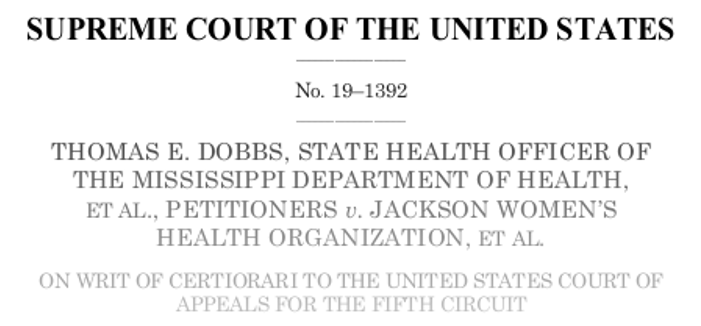
The first part of the Dobbs decision is just an introduction. It’s not very long or very detailed, and provides general information about the decision and what led to it.
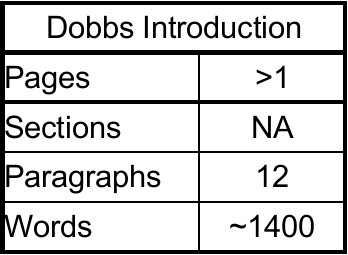
The first paragraph is a progression of general ideas to open the discussion. A college freshman in a comp class is encouraged to use these sentences to grab the reader’s attention, but Justice Alito has no need to compel the reader. Read it or don’t. He doesn’t care. He’d probably rather you didn’t.
So after that blistering opening, the second through eighth paragraphs provide some background information about the Constitution, about abortion laws, about Roe v Wade, and about Planned Parenthood v Casey.
Paragraph 2 is about how Roe changed 185 years of abortion law in the United States.
Paragraph 3 is about Roe’s “trimester scheme” and the problems the majority sees in it.
Paragraph 4 is about state law at the time of Roe.
Paragraphs 5 and six are about Casey in regard to Roe—how it maintained the right to abortion while changing some elements of the prior ruling.
Paragraph 7 is about how Casey didn’t lead the country to come together in agreement about abortion.
Paragraph 8 is about the Mississippi Gestational Age Act and the case being considered, and explains that the court granted certiorari to decide whether Roe and Casey rightly block this act, or if Roe and Casey need to be struck down so Mississippi’s law can be enforced.
Paragraph 9 addresses the absence of any right to abortion expressed in the constitution, which is true. Nobody disputes that. The rest of paragraph nine claims that the right to abortion is also not implied anywhere in the constitution or its amendments. This specifically names the 14th Amendment, and even more specifically, the Due Process clause in the 14th Amendment.
Paragraph 10 identifies two requirements of a proposed right to be covered under the Due Process clause: that the right in question be “deeply rooted in this Nation’s history and tradition” and “implicit in the concept of ordered liberty.” While the fact that a right to abortion doesn’t appear in the Constitution is not at all controversial, this claim raises a number of questions and disagreements.
Paragraph 11 is about the judicial concept of stare decisis, which is a principle cited in Casey as a reason to maintain Roe. The majority here claims that stare decisis is insufficient to uphold either Roe or Casey because of their specific flaws. This is also a matter of contention.
Paragraph 12 offers an inspirational call to action, which isn’t a bad strategy for an essay, but I wonder if it’s necessary for what seems to serve as just a statement of explanation. It has kind of a strange tone. It’s almost inspirational, and strikes me as a tribute to the late Justice Antonin Scalia, who died before his long battle against Roe could be decided.
 Cynical Jason